SCHOOL UNIFORMS PROGRAM: Uniformity in learning goes beyond the school uniform
ZEHP OMWENO FOUNDATION | SCHOOL UNIFORMS PROGRAM BLOG
Beyond the Uniform: Restoring Dignity, Building Confidence and Keeping Learners in School
Every child has the right to education, development, and aspirations regardless of their socio-economic status. The School Uniforms Program is one of the basic needs of learning that Zeph Omweno Foundation is helping vulnerable learners access and restoring their dignity, confidence, and sense of belonging.
Introduction: Every child deserves a chance to learn
As one of the most fundamental of human needs, children have a right to learn.
Education is one of the greatest assets to change lives, build communities and end poverty. It provides opportunities, knowledge and skills to young people and helps them to create better futures for themselves and their families.
However, it is not always easy for many children in rural areas to attend school. The students who are behind the classroom doors have families that face difficulties providing school uniforms, shoes, learning materials, food and other essential items.
Children who don't have the right school uniform may find school a challenging emotional journey. When clothes are worn out, torn or different from other children, some learners may feel embarrassed. Anxiety surrounding judgment can be a challenge for others, and for some families, it's a decision of whether to prioritize immediate household needs or school needs.
These barriers serve as a reminder that access to education is not just the case of being in a classroom; it is also about providing a space in which each learner can be present in an accepting and confident way.
These facts have led Zeph Omweno Foundation to undertake its School Uniforms Program, targeting vulnerable learners and enabling them to engage more fully in their learning.
Recognizing the problem: Poverty as a problem that interferes with education
Parents and guardians in lower-income families are very hardworking, trying to support their children with limited and often irregular incomes. Small-scale farmers, people on casual employment, and other informal sources of livelihood could find it difficult to afford their children's school fees, especially if more than one child is attending school.
These challenges can be particularly severe where a family has been separated, a breadwinner has died, a family member is out of work, sick, or other factors have made it harder for families to provide for their children.
When these stresses build up, learners might have more problems than just with their clothes. They might not be regularly at school, or they might not feel confident with their classmates or may not be able to be as involved as they would like in school life. In some instances, not being able to fulfill school requirements may be a factor in missed class time and loss of engagement in learning.
Parents can face frustration, concern and a feeling of powerlessness in these situations. There are plenty of people who wish for their children to do well and are unable to afford to cover all the educational costs.
The problem is that there is no uniform. It is the larger inequality in society that makes it challenging for some children to get a basic education. However, acknowledging this fact, Zeph Omweno Foundation takes effort to help those who are financially disadvantaged students whose education is adversely impacted.
The School Uniforms Program: Compassion into action.
Zeph Omweno Foundation takes its mission to educate the community to action in many hands-on ways, including the School Uniforms Program.
The program aims to alleviate financial constraints affecting vulnerable learners to access the necessary school needs. The Foundation supplies school uniforms to children from poor families to assist indigent families to cope with some of the costs of education, and to give school children the dignity and confidence to attend school.
The Foundation sees uniforms not as items of clothing, but also as a part of a child's educational experience. A uniform will enable a learner to feel part of the school community, and to take part in school activities and focus on what education has to offer.
The program also provides the opportunity to partner between schools, parents, community, volunteers and development partners. These connections allow the Foundation to understand and direct support towards learners in greatest need.
The program is founded on an important principle: You should provide opportunities for all children to learn, regardless of their family's income.
How the program is designed to work:
The Foundation's School Uniform Program is designed to provide a systematic plan to target school uniform assistance to the intended beneficiaries and to ensure that the targeted resources are being utilized in a responsible manner.
1. Involving schools and communities. Involving schools and communities.
The Foundation engages with the participating schools and related community groups to gain insights into the issues impacting learners. The consultations will be used to identify the support required and to provide a platform for collaboration.
2. Identifying vulnerable learners
Identification of beneficiaries is concerned with gaining insight into the situation of the learners and giving priority to the children from families with problems in providing school uniforms. Support from schools can help to promote selection based on equity, transparency and need.
3. Uniforms – to purchase and inspect.
Uniforms are purchased based on recommendations and specifications of participating schools. Quality checks help to ensure that garments are suitable, appropriately sized and ready for distribution.
4. Providing uniforms to learners
The Foundation acts as the liaison to schools and other appropriate parties for distribution. Keeping good records and acknowledging ensures accountability and ensures that the support is reaching those intended.
5. Monitoring progress and learning
Follow-up activities and feedback from learners, parents and teachers inform the Foundation about the reception of the intervention, requests to address unmet needs, and guides future interventions.
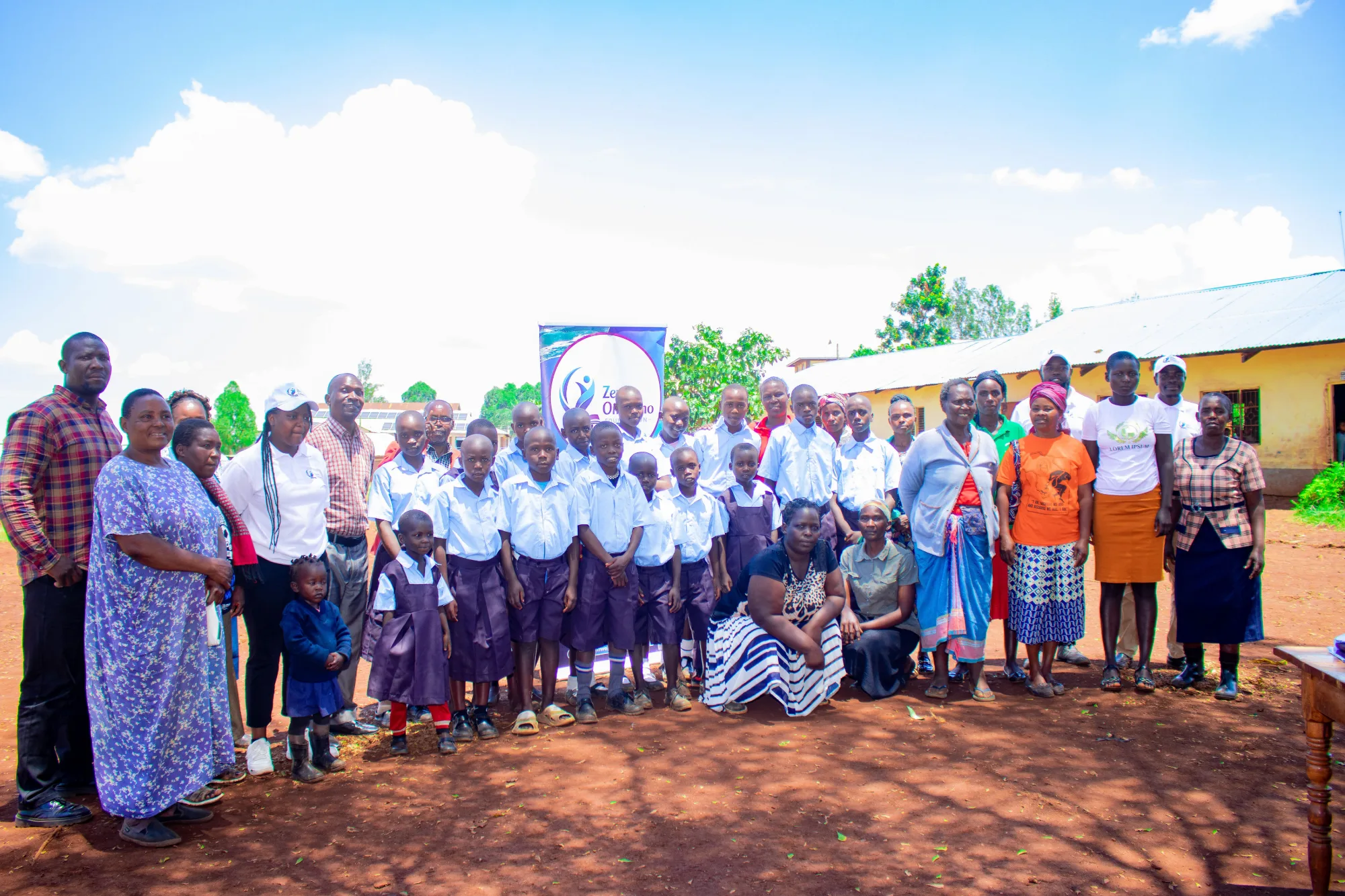
A closer look: Supporting learners at Nyakoiba Comprehensive SDA School
This second batch of school uniforms to Nyakoiba Comprehensive SDA School is a real manifestation of the Foundation's support for learners.
Every distribution exercise is a chance to address a child's needs that may otherwise not be met in order to provide them with the things they need in school. It also illustrates the need to work closely with schools in identifying their needs and providing support where it is needed.
The uniform intervention is more than a change of clothing for the learners receiving uniforms. It is a way of acknowledging the need and a means to send the message that education is important. For parents and guardians, that can make the job of buying school clothes a bit easier when they have to cover the cost of rent, mortgage, and school. It offers teachers another chance to foster learners' confidence in school life.
The distribution also shows the importance of volunteers who contribute their time, effort, and commitment in making the Foundation's mission a reality.
The program offers a valuable basis for tackling one of the operational challenges facing vulnerable learners, although the longer-term impacts will be verified using school follow-up and beneficiary feedback.
More than clothing: the impact we want to achieve.
The School Uniforms Program is more than just about clothing. It is designed to influence a number of interrelated areas.
1. The restoration of dignity and self-confidence.
Children should not be embarrassed to be in school due to issues that fall outside their control. Wearing a suitable uniform may minimize the obvious indicators of wealth and poverty and help learners to be more confident in their participation. All children deserve to be cared for so they feel appreciated, respected, and believe that they can achieve their dreams.
2. Removing financial barriers to families.
For low-income families, school uniforms can be a big expense and take priority over other necessities. The Foundation has supported those pupils in need by supplying them with clothes for school. This support may mean that families can use what little resources they have on hand to allocate to other needs, though the amount of financial relief received will vary from house to house.
3. Fostering school attendance and participation
Failure to meet school requirements may prevent students from attending school practically and emotionally. The program seeks to reduce the barriers to vulnerable learners participating in school life by tackling issues related to uniforms. Teachers' notes and attendance records will be used to determine if the intervention has a positive effect on attendance and absence.
4. Support inclusion and sense of belonging
School should be a place where children feel accepted and can learn with others at school. Some barriers to participation can be lessened by supporting learners whose needs are met by a wider range of learners. Supporting learners from disadvantaged groups can help reduce some of the barriers to participation. The Foundation's mission is to create a learning environment that is free from poverty and does not bar a child from feeling good about herself or himself.
5. Improving the connection with communities
The program promotes collaboration, between schools, parents, volunteers, the community, and partners. These relationships can assist in identifying vulnerable learners, mobilizing resources, and to enhance collective responsibility for education. Making education more sustainable is a community effort that can't be done within the four walls of a school or the confines of a single family.
6. Supporting the larger task of ending the cycle of poverty
Education provides learners with knowledge, skills, and opportunities which can enhance their future prospects. A uniform isn't the only thing that will stop poverty or ensure academic success, but meeting basic educational barriers is a practical way to help a child on their learning path. The Foundation's long-term goal is to enable children to stay in school, build their skills, and take advantage of the opportunities they might not otherwise have.
What you can do to help the School Uniforms Program
Each child has their dream. One wants to be a teacher, another, a doctor, an engineer, an entrepreneur, a community leader! Such dreams deserve an opportunity to grow.
Help the School Uniforms Program by:
1. New school outfits or donations to buy school outfits.
2. Sponsoring individual or multiple vulnerable learners.
3. Engaging the Foundation with partners and potential donors.
4. Using corporate social responsibility to support the program.
5. Giving time and professional expertise.
6. Disseminating the Foundation's activities in order to raise awareness of the educational issues that impact vulnerable children.
You can make a difference and help a child make a difference for a brighter future.
For any partnership/collaboration possibilities, contact Zeph Omweno Foundation on www.zephomwenofoundation.org or by phone at 0743 446 763.